Blue Crown Aqua
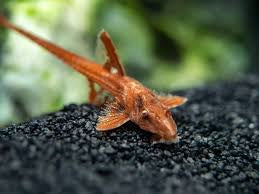
Red Whiptail Catfish
Red Whiptail Catfish
Regular price
$9.99 USD
Regular price
Sale price
$9.99 USD
Shipping calculated at checkout.
Quantity
Couldn't load pickup availability
The red whiptail catfish (Rineloricaria sp. L010a), also known as the Red Lizard Catfishor Red Lizard Whiptail Pleco, is a slender, peaceful freshwater fish popular in the aquarium hobby. Known for its brilliant red to rusty orange coloration and long, whip-like tail, it is an excellent addition to most community tanks.


Key Characteristics
- Size: This species reaches a maximum size of around 4.5 to 6 inches (11-15 cm).
- Temperament: It is a very peaceful and shy bottom-dweller, generally solitary but can be kept in groups of three or more to encourage natural behaviors. They are non-aggressive and compatible with a variety of other peaceful fish and invertebrates.
- Origin: While parent species are native to South America (likely the Amazon basin), the red color morph is generally considered to be an aquarium strain, a result of captive breeding.
- Diet: Omnivorous, primarily a grazer that feeds on algae and biofilm. Its diet should be supplemented with high-quality sinking pellets, algae wafers, blanched vegetables (zucchini, spinach), and occasional frozen meaty treats like bloodworms or daphnia.
- Aquarium Role: They help keep the tank clean by scavenging for leftover food and grazing on algae, using specialized mouthparts to scrape surfaces.
Aquarium Care Guidelines
To ensure a healthy environment for your red whiptail catfish, consider the following care points:
- Tank Size: A minimum of a 30-gallon aquarium is recommended, with larger tanks needed for groups.
-
Water Parameters: They are adaptable but thrive in stable conditions with good filtration and high aeration.
- Temperature: 72-84°F (22-29°C).
- pH: 6.0-7.5 (slightly acidic to neutral).
- Hardness: Soft to moderately hard water.
- Decor: The tank should mimic their natural riverbank habitat with a soft, sandy substrate to protect their undersides, along with plenty of driftwood, rocks, and plants to provide ample hiding spots.
- Lighting: Dim lighting is preferred as they are largely nocturnal and generally more active in the evening.
- Compatibility: Best kept with non-aggressive, peaceful tank mates such as tetras, rasboras, or dwarf cichlids. Avoid boisterous or large, predatory species that might outcompete them for food.