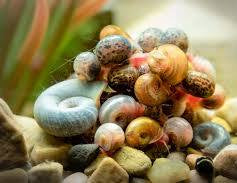
Mixed Color Ramshorn Snails (¼–½ inch) – Live Freshwater Snails

Snail Care CompassTheir happy-tank essentials.
- Meet the species
- Planorbidae (ramshorn snail family; exact species not confirmed)
- Care level
- Easy – established freshwater aquarium with stable water quality.
- Approximate size at purchase
- Approximately ¼–½ inch (0.6–1.3 cm) across the shell.
- Adult size
- Varies by species; aquarium ramshorns commonly reach approximately 1–2.5 cm across the shell.
- Temperature
- 68–79°F (20–26°C).
- pH
- 7.0–8.0; avoid acidic, mineral-poor water that can damage shells.
- Diet
- Algae, biofilm and decaying plant matter; supplement with sinking snail food and vegetables. Provide dietary calcium.
- Minimum aquarium size
- 5 gallons or larger, with stocking matched to filtration and available food.
- Temperament and compatibility
- Peaceful with shrimp and calm fish; avoid snail-eating fish and assassin snails.
- Habitat and shelter
- Established aquarium with plants and grazing surfaces; maintain mineral availability for healthy shells.
- Sex
- Hermaphroditic – male/female selection does not apply.
- Breeding difficulty
- Easy – lays egg clusters in freshwater; populations can increase quickly when food is abundant.
- Water hardness
- Moderately hard, mineral-rich water; avoid very soft water.
- Shell and mineral care
- Provide mineral-rich water and dietary calcium. Avoid prolonged acidic conditions and copper-based treatments not labeled safe for snails.
- Recommended group size
- No fixed social minimum; stock according to food availability and aquarium capacity.
- Reproduction
- Hermaphroditic; lays gelatinous egg clusters that develop in freshwater. Populations can grow quickly with abundant food.
- Selection
- Our choice – mixed colors; specific colors, patterns and assortment are not guaranteed.
More care & character
- Temperament and compatibility
- Peaceful with shrimp and calm fish; avoid snail-eating fish and assassin snails.
- Habitat and shelter
- Established aquarium with plants and grazing surfaces; maintain mineral availability for healthy shells.
- Sex
- Hermaphroditic – male/female selection does not apply.
- Breeding difficulty
- Easy – lays egg clusters in freshwater; populations can increase quickly when food is abundant.
- Water hardness
- Moderately hard, mineral-rich water; avoid very soft water.
- Shell and mineral care
- Provide mineral-rich water and dietary calcium. Avoid prolonged acidic conditions and copper-based treatments not labeled safe for snails.
- Recommended group size
- No fixed social minimum; stock according to food availability and aquarium capacity.
- Reproduction
- Hermaphroditic; lays gelatinous egg clusters that develop in freshwater. Populations can grow quickly with abundant food.
- Selection
- Our choice – mixed colors; specific colors, patterns and assortment are not guaranteed.
Regular price
$9.99 USD
Regular price
Sale price
$9.99 USD
Shipping calculated at checkout.
Savings use the smallest pack’s price per paid item. DOA extras are excluded from the comparison.
Low stock: 2 left
Quantity
Livestock safety comes first
We use heat or cold packs when needed and may hold livestock shipments during unsafe weather.
How we prepare your shipment

| Weather check | We review temperatures along the shipping route, including the origin and destination, before sending livestock. |
|---|---|
| Protective packing | We add appropriate heat packs or cold packs based on expected temperatures and the livestock being shipped. |
| Safety first | We reserve the right to hold a shipment if conditions are too hot or too cold for safe transit. Shipping dates may change to protect your animals. |
Couldn't load pickup availability
WE SHIP MON–WEDUPS / FEDEX · 2-DAY & NEXT-DAY
Retail orders placed by Saturday ship the following week.
Quality livestock
Carefully selected shrimp and fish for your aquarium.
Live arrival guaranteed
Covered on eligible shipments under our DOA policy.
View guarantee detailsAbout this item
Mixed Color Ramshorn Snails, approximately ¼–½ inch at purchase. Colors and shell patterns vary; specific colors are not guaranteed. These freshwater snails graze on algae, biofilm and decaying organic matter, and breed readily in established aquariums.